 Medispirex
Medispirex
Medispirex
Why Choose Titanium Cannulated Screws for Medical Use?
Orthopedic fixation is becoming more demanding as trauma care serves an aging, active population. The World Health Organization reports that musculoskeletal conditions affect approximately 1.71 billion people worldwide. This burden increases the need for reliable implants, efficient surgical techniques, and predictable recovery. Titanium Cannulated Screws answer several practical requirements. Their hollow design allows guide-wire placement, helping surgeons maintain alignment during difficult fracture fixation. Titanium alloys also offer a favorable strength-to-weight balance and strong corrosion resistance. Small details matter.
Material selection still requires restraint. The U.S. Food and Drug Administration recognizes implantable titanium alloys through established material standards, including ASTM F136. However, biocompatibility alone does not guarantee clinical success. Screw diameter, thread design, bone quality, insertion torque, and load distribution remain equally important. Grand View Research and Fortune Business Insights both identify orthopedic implants as a growing medical-device segment, driven by trauma, sports injuries, and population aging. Their market data supports continued innovation, but market growth is not proof of superiority.
Professor Peter V. Giannoudis, a recognized orthopedic trauma specialist, has stated, “The goal of fracture treatment is to restore function while minimizing biological and mechanical complications.” That principle explains the interest in Titanium Cannulated Screws. They can support precise placement and less disruptive fixation in selected procedures. Yet they are not universally ideal. Surgeons must evaluate anatomy, fracture pattern, imaging, and patient-specific risks. The real advantage is controlled decision-making, not fashionable material choice. More clinical comparison is still needed.
What Are Titanium Cannulated Screws?
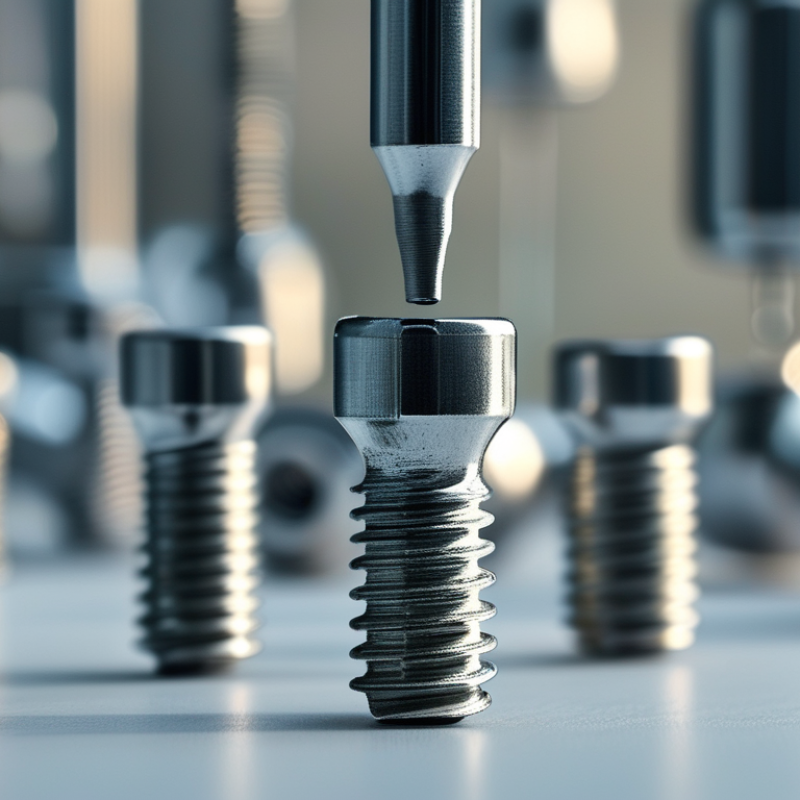
Titanium cannulated screws are hollow orthopedic fixation devices made from medical-grade titanium alloys. Their central channel allows a guidewire to pass through the screw during surgery. This design helps surgeons align fragments before final insertion, especially in fractures near joints, such as the hip, ankle, or wrist. The screw still provides compression, while the guidewire improves control through a small incision.
Titanium offers a high strength-to-weight ratio and generally strong corrosion resistance. It also produces fewer imaging artifacts than some steel alternatives. That matters when postoperative X-rays or computed tomography scans assess bone position. The World Health Organization reports that musculoskeletal conditions affect about 1.71 billion people worldwide, creating continuing demand for dependable fixation methods. A 2023 Grand View Research report estimated the global orthopedic devices market at approximately 48.6 billion US dollars, although cannulated screw sales are not always reported separately.
The design is useful, but not automatically superior. A hollow core can reduce the screw’s cross-sectional strength, particularly in smaller diameters or high-load areas. Surgeons must consider bone quality, fracture pattern, thread length, and insertion torque. Titanium implants can also complicate removal if bone grows firmly around them. Clinical experience matters here. The ideal screw is not always the lightest one. ASTM F136 provides specifications for wrought titanium alloy used in surgical implants, yet compliance alone cannot replace patient-specific planning. That distinction is easy to overlook.
| Data Dimension | Typical Data or Description | Medical Relevance | Important Consideration |
|---|---|---|---|
| What the device is | A bone screw with a longitudinal hollow channel through its shaft. | The central channel allows the screw to be inserted over a guidewire or guide pin. | The hollow design changes the screw’s cross-sectional structure and may reduce its resistance to bending compared with a solid screw of the same outer diameter. |
| Typical material | Medical-grade titanium alloys, commonly Ti-6Al-4V ELI, specified in standards such as ASTM F136 or ISO 5832-3. | Provides a combination of strength, corrosion resistance, and biological compatibility. | The exact alloy, surface treatment, dimensions, and mechanical performance must be confirmed in the applicable product documentation. |
| Density | Approximately 4.43 g/cm³ for Ti-6Al-4V. | Titanium implants are substantially lighter than stainless steel implants, which have a density of approximately 7.9–8.0 g/cm³. | Lower density does not automatically mean lower clinical risk; implant strength depends on geometry, alloy condition, and loading. |
| Elastic modulus | Approximately 110 GPa for Ti-6Al-4V; stainless steel is typically around 190–200 GPa. | Titanium has a lower stiffness mismatch with cortical bone than stainless steel, which may help reduce stress shielding in suitable applications. | Stress shielding is influenced by the complete fixation construct, not by material modulus alone. |
| Tensile strength | Ti-6Al-4V ELI commonly has a minimum specified tensile strength near ಅಥವಾ 860 MPa, depending on the governing material standard and product form. | Supports the structural demands of many orthopedic fixation applications. | A cannulated screw’s actual fatigue and pull-out performance depends on diameter, thread profile, cannulation size, heat treatment, and bone quality. |
| Corrosion resistance | Titanium forms a stable, protective oxide layer when exposed to air and physiological environments. | Helps maintain material stability in the body and limits metal ion release under normal conditions. | Surface damage, contamination, fretting, or contact with dissimilar metals can affect corrosion behavior. |
| Biocompatibility | Implant-grade titanium and titanium alloys are widely used in orthopedic and dental implants because of their established biological compatibility. | May support long-term implant use when the device is properly manufactured, sterilized, and clinically indicated. | Patient-specific allergies, sensitivities, infection risk, and other contraindications must be assessed clinically. |
| Guidewire-assisted placement | The screw can be advanced along a pre-positioned guidewire or guide pin. | Can improve trajectory control and help support minimally invasive or percutaneous fixation techniques. | The guidewire must remain correctly positioned, and the surgical technique must follow the applicable instructions for use. |
| Compression capability | Partially threaded designs can generate interfragmentary compression when the threads engage the far fragment and the near fragment is appropriately prepared. | Compression can help stabilize selected fractures and support bone healing. | Compression performance depends on thread length, pitch, screw position, bone quality, and fracture pattern. |
| Common orthopedic uses | Selected fracture fixation, osteotomy fixation, arthrodesis, and fixation of small- or large-bone fragments, depending on screw dimensions. | The cannulated format is useful when accurate placement and controlled trajectory are important. | The appropriate screw type and size must be selected according to anatomy, fracture configuration, and required mechanical stability. |
| Radiographic visibility | Titanium is radiopaque and can be identified on standard X-ray and computed tomography imaging. | Allows postoperative assessment of implant position and bone healing. | Metal-related imaging artifacts may still occur, particularly in computed tomography and magnetic resonance imaging. |
| MRI considerations | Titanium is generally weakly magnetic, but MRI safety depends on the complete implant system and its labeling. | Many titanium fixation devices can be used in MRI under specified conditions. | The exact MR Conditional conditions, field strength, specific absorption rate, and scan restrictions must be verified before imaging. |
| Surface and bone interaction | Machined, polished, anodized, or otherwise treated surfaces may be used depending on the intended application. | Surface characteristics can influence handling, tissue response, and the interaction between the implant and bone. | Surface treatment must be validated for the specific device; it should not be assumed that all titanium surfaces perform identically. |
| Key advantages | Low density, high strength-to-weight ratio, corrosion resistance, established biocompatibility, and guidewire-assisted placement. | Offers a versatile option for selected orthopedic fixation procedures. | Advantages must be balanced against device cost, cannulation-related mechanical effects, surgical technique, and patient factors. |
Note: Material values are typical reference values and may vary according to alloy grade, manufacturing process, heat treatment, product geometry, and applicable standards. Clinical decisions should be based on the approved device labeling and the judgment of a qualified healthcare professional.
: It has a hollow channel through its center. A guidewire passes through this channel before drilling and insertion. This helps control the screw’s path.
The guidewire establishes the intended trajectory first. Imaging can confirm its position in two planes. The screw then advances over the wire. Alignment matters.
Surgeons may use them for scaphoid, femoral neck, ankle, and selected foot fractures. They can help compress small fragments through limited incisions. Suitability depends on the fracture pattern and bone quality.
Titanium is relatively lightweight and corrosion resistant. It may create less imaging distortion than denser metals. This can support postoperative assessment. Less artifact is not perfect imaging.
Yes, the channel removes some material from the screw. This may reduce bending strength, especially in narrow screws under heavy loads. Diameter, core strength, and expected loading require careful review.
Surgeons should assess diameter, thread length, trajectory, bone quality, and expected load. They should also consider fracture stability and patient-specific risks. Material choice alone is insufficient.
A misplaced guidewire can direct the screw into the wrong location. Poor positioning may reduce compression or cause joint irritation. Loose bone purchase can lead to migration or fixation loss. Small errors matter.
No. Excessive tightening can damage bone. Weak bone may not hold the screw securely. Biological safety, cleanliness, sterilization, and traceable manufacturing also matter. Clinical judgment remains essential.
They should keep the guidewire centered and verify alignment with imaging. They should avoid excessive insertion force. A second check can reveal an unnoticed deviation. Experience helps, but it is not infallible.
Titanium Cannulated Screws are orthopedic implants designed with a hollow central channel that allows a guidewire to support accurate placement during surgery. This cannulated structure can help surgeons position the screw along the intended path, especially in procedures involving small bones, complex fractures, or limited surgical access. After placement, the screw provides compression and stability to support proper bone healing.
Titanium is widely suitable for medical implants because it is strong, lightweight, corrosion resistant, and generally well tolerated by the body. These screws may be used in fracture fixation, joint-related procedures, foot and ankle surgery, and other orthopedic applications. Proper selection requires careful consideration of screw diameter, length, thread design, bone quality, and the patient’s anatomy. Sterility, surgical technique, implant compatibility, and professional clinical judgment are also essential for safe and effective use.
