Medispirex Medispirex

What Are the Top Spinal Internal Fixation Systems?

Time:2026-11-13 Author:Amelia
0%

Spinal Internal Fixation Systems help stabilize the spine when movement between vertebrae must be limited during healing. Common designs include pedicle screws connected by rods, plates fixed to the front of the spine, and implants used alongside spinal fusion. A surgeon may consider the affected spinal level, the patient’s anatomy, bone quality, diagnosis, and treatment goals. The hardware is not the whole operation. Placement, surgical technique, and follow-up care matter too.

What counts as a “top” system? There is no single answer for every patient or procedure. A construct suited to one spinal level may not fit another. Even details such as screw shape, rod material, and available sizes can affect how a system is selected. Small differences matter. Rankings can look cleaner than real clinical decisions, and that is worth keeping in mind.

This guide compares leading system types and notable design features without treating popularity as proof of better outcomes. It also explains what clinicians typically assess, including published clinical evidence, device labeling, and the needs of the individual patient. Readers should use these details to ask informed questions, not to choose an implant independently. Evidence can be uneven, and product names may change. A qualified spine specialist can explain which options are appropriate and why.
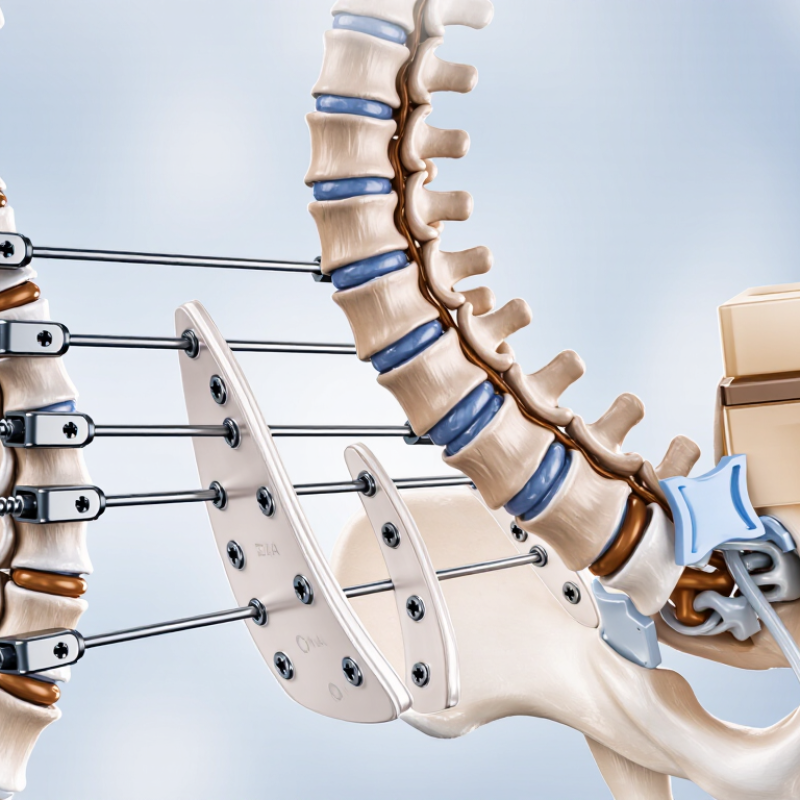
What Are the Top Spinal Internal Fixation Systems?

What Spinal Internal Fixation Systems Are and How They Work

Spinal internal fixation systems are implants used to stabilize selected parts of the spine. They may include screws, rods, plates, or hooks, chosen to suit the anatomy and surgical plan. A surgeon places these components to limit unwanted movement and help maintain alignment. The hardware does not repair a damaged disc or make bone fuse on its own. Not by itself. When fusion is part of treatment, bone graft and time are also important.

The exact setup depends on the condition, the vertebrae involved, bone quality, and whether surgery approaches the spine from the front or back. For example, screws may anchor into vertebrae and connect to rods that hold a planned position. Plates can support selected segments. Imaging helps the surgical team assess placement, but every spine has its own constraints. Even good plans meet imperfect bone. Recovery and follow-up matter, too; clinicians monitor healing and watch for pain, changes in movement, or implant-related concerns. There is no single best system for everyone. A qualified spine specialist can explain the intended benefits, risks, and alternatives for an individual case.

What Are the Top Spinal Internal Fixation Systems? — What They Are and How They Work

Spinal internal fixation systems use implants to stabilize selected vertebrae while healing occurs. Common approaches include posterior pedicle screw–rod systems, cervical lateral-mass screw–rod systems, and anterior cervical plates. The appropriate approach depends on the spinal region and the patient’s condition; these systems are not a performance ranking.

Typical Vertebral Count by Spinal Region

These anatomical counts help show the regions that fixation systems may address. Most adults have 7 cervical, 12 thoracic, and 5 lumbar vertebrae. The sacrum usually consists of 5 fused vertebrae; the coccyx typically has 4 fused segments, but the number can vary.

Core Components Used in Modern Spinal Fixation

What Are the Top Spinal Internal Fixation Systems?
Core Components Used in Modern Spinal Fixation

Modern spinal fixation systems commonly use screws and rods to stabilize selected vertebrae. Pedicle screws anchor into the vertebrae, while contoured rods connect them and help maintain alignment. The surgeon chooses their size and placement according to spinal anatomy, the condition being treated, and bone quality. Fit matters. These parts work together, but they do not replace careful surgical planning.

Other components may include cross-connectors, hooks, plates, or specialized screws. Their use depends on the spinal region and the goals of the procedure. Implants may be made from materials such as titanium alloys or other medical-grade metals; material choice can affect strength and imaging appearance. There is no single setup for every patient. Small differences in anatomy can change the plan, and the benefits and risks need individual assessment.

Tips: Ask which components are planned and why they suit your case. Confirm how follow-up imaging and recovery will be monitored. Implant details can feel technical, and even a clear explanation may leave questions; write them down before your appointment.

Major Types of Spinal Internal Fixation Systems

Major spinal internal fixation systems differ by the anatomy they stabilize and the surgical route used. Pedicle screw-and-rod constructs anchor into vertebrae and help control movement, often across several levels. Anterior plates sit along the front of the cervical spine, holding vertebrae steady after disc removal. Hooks and wires provide alternative attachment points in selected cases.

Not interchangeable.

Interbody cages are placed between vertebrae to support spacing and fusion; they may be paired with screws or plates for added stability. The choice depends on the spinal level, bone quality, deformity, and surgeon’s plan—not simply the device’s shape.

AHRQ’s HCUP report found U.S. inpatient spinal fusions increased 137%, from about 174,000 in 1998 to 413,000 in 2008. That historical figure covers inpatient procedures, not every outpatient operation or a specific fixation type.

It shows the scale of fusion care, but not which system suits an individual patient. The distinction can be easy to miss.

How Fixation Systems Differ Across Spinal Regions

Spinal fixation is not one universal construct. The cervical spine is compact and close to the spinal cord, nerve roots, and vertebral arteries. Surgeons may use lateral mass screws in the neck, while selected cases call for cervical pedicle screws. Those offer a different anchor, but demand careful placement. Small margins matter.

In the thoracic region, pedicle screws must account for changing anatomy and proximity to the lungs and major vessels. Lumbar systems commonly use pedicle screws connected by rods to stabilize a motion segment. When fixation extends to the sacrum, pelvic screws can provide added anchorage. The anatomy changes. So should the plan. AHRQ’s HCUP Statistical Brief #70 recorded 413,171 spinal fusion procedures in U.S. hospitals in 2008, up from 174,223 in 1998. That historical rise shows the scale of fusion practice, not which system is best. System choice depends on the level, bone quality, deformity, and surgical goals. A construct that works well in the lumbar spine may not suit the cervical spine. Even these distinctions can oversimplify real cases. The evidence and anatomy do not always offer a neat answer.

Factors for Comparing and Selecting a Fixation System

What Are the Top Spinal Internal Fixation Systems?
Factors for Comparing and Selecting a Fixation System

Choosing a spinal fixation system starts with the anatomy and the surgical goal, not a product ranking. AHRQ’s HCUP Statistical Brief #170 reported about 465,000 inpatient spinal fusion procedures in 2011, a 70% increase from 2001. These figures describe procedure volume, not the performance of any device. Still, they underline why careful system selection matters. Compare intended spinal levels, screw and rod options, material, and compatibility with imaging and other instruments.

Clinical evidence deserves close review. Check whether studies match the patient group and procedure under consideration, and examine reported complications, follow-up periods, and revision rates. Also assess how the system supports the planned surgical approach, how readily components can be handled, and what training the team needs. Bone quality and spinal anatomy can change the practical trade-offs. A neat comparison table can obscure those details; I would question any choice based only on one headline outcome.

Tips: Ask for evidence tied to the intended use. Confirm component availability and instrument requirements before surgery. Fit matters. So does workflow. Record why the selected system suits the patient’s anatomy, the treatment plan, and the team’s experience. A perfect scorecard does not exist. Revisit assumptions when evidence or clinical needs change.

What Are the Top Spinal Internal Fixation Systems? - Factors for Comparing and Selecting a Fixation System

System type Typical anatomical region and use How fixation is achieved Potential advantages Key factors and limitations
Posterior pedicle screw–rod system Commonly used in the thoracic and lumbar spine for stabilization, deformity correction, and fusion procedures. Screws are placed through the pedicles into vertebral bodies and connected with rods to control motion across selected levels. Provides strong three-column fixation when anatomy and screw placement are suitable; supports correction and stabilization over multiple levels. Requires careful attention to vertebral anatomy, bone quality, screw trajectory, and proximity to neural and vascular structures. The number of levels and construct design depend on the clinical goal.
Cervical lateral mass screw–rod system Often used for posterior fixation in the subaxial cervical spine, including selected cases of instability, deformity, or fusion. Screws anchor in the lateral masses and connect to rods spanning the intended vertebral levels. Offers posterior stabilization while avoiding the need for pedicle screws at many subaxial cervical levels. Available bone for screw purchase, individual anatomy, and nearby nerve roots and vertebral arteries influence placement. Upper cervical and cervicothoracic regions may call for different fixation strategies.
Anterior cervical plate and screw system Used from the front of the neck, commonly to supplement selected cervical discectomy and fusion procedures. A plate is secured to adjacent vertebral bodies with screws, typically spanning the operated disc space or levels. Provides anterior column support and can help maintain alignment and stability while fusion develops. Plate profile, screw position, number of levels, and nearby anatomical structures matter. Potential considerations include swallowing-related symptoms and the effect of additional levels on construct design.
Cervical pedicle screw–rod system Used in selected posterior cervical or cervicothoracic cases when robust fixation or complex correction is required. Screws pass through cervical pedicles and are connected by rods to form a posterior construct. Can provide strong fixation and may be considered when other posterior anchor options are insufficient or unsuitable. Cervical pedicles are relatively small and close to important neural and vascular structures. Detailed preoperative assessment and appropriate surgical expertise are essential.
Interbody cage with integrated fixation Used in selected cervical or lumbar fusion procedures to support the space between vertebral bodies. A cage occupies the disc space; integrated screws or other anchors may attach it to adjacent vertebral bodies. Combines interbody support with local fixation in a single implant construct, depending on the approach and device design. Suitability depends on surgical approach, anatomy, bone quality, endplate preparation, and the stability required. Some cases may require supplemental fixation.
Posterior hooks or sublaminar fixation Used in selected thoracic or spinal deformity constructs when anatomy or the operative plan favors non-pedicle anchors. Hooks engage parts of the posterior vertebral elements; sublaminar devices pass beneath a lamina and connect to a rod or other construct. Can offer alternative anchor points when pedicle screw placement is not selected or is not feasible at particular levels. Anchor choice depends on local anatomy, bone quality, and the intended correction. Sublaminar passage requires particular care because of the spinal canal and neural structures.

These are common system categories, not a ranked list. Selection is individualized according to the diagnosis, spinal level, anatomy, bone quality, desired alignment and stability, fusion plan, and the surgeon’s assessment. This overview is educational and does not replace clinical advice.

FAQS

What is a spinal internal fixation system?

It is implanted hardware used to stabilize selected parts of the spine. It may include screws, rods, plates, or hooks.

Do screws and rods repair damaged discs or create fusion?

No. They help limit unwanted movement and maintain alignment. Bone graft and time are also important when fusion is planned.

What components are commonly used?

Pedicle screws anchor into vertebrae, while contoured rods connect them. Some plans also use plates, hooks, wires, or cross-connectors. Fit matters.

How do surgeons choose a fixation system?

They consider spinal anatomy, the condition, bone quality, affected levels, and surgical approach. Small anatomical differences can change the plan.

Are all spinal fixation systems interchangeable?

No. Anterior plates, screw-and-rod constructs, and other components suit different locations and purposes. The device’s shape alone does not determine suitability.

What is an interbody cage used for?

It sits between vertebrae to support spacing and fusion. It may be paired with screws or plates for added stability.

What materials may spinal implants use?

They may use titanium alloys or other medical-grade metals. Material choice can affect strength and how implants appear on imaging.

What should patients ask about before surgery?

Ask which components are planned, why they fit your case, and how follow-up imaging will be handled. Write down questions; the details can still feel confusing.

Does a fixation system guarantee a particular recovery?

No. Clinicians monitor healing, pain, movement, and possible implant concerns. A plan can change, and no single system suits everyone.

Conclusion

Spinal Internal Fixation Systems are medical devices used to stabilize the spine when support is needed during healing or to help maintain alignment. They work by connecting selected vertebrae so that movement at the treated area is limited. Modern systems may include screws, rods, plates, hooks, and connecting components, with each part serving a role in anchoring or linking the construct.

Common system types include pedicle screw-and-rod constructs, plates, and other devices designed for particular spinal regions or surgical needs. Their design and placement can vary between the cervical, thoracic, and lumbar spine because these regions differ in anatomy, movement, and load. Comparing systems involves considering factors such as anatomical fit, stability, material and design characteristics, surgical approach, and the patient’s individual needs. Selection is a clinical decision made by qualified professionals, balancing the intended support with the specific characteristics of the spinal condition.

Amelia

Amelia

Amelia is a seasoned marketing professional with a wealth of expertise in our company’s core offerings. With an unwavering passion for driving growth and innovation, she plays a pivotal role in shaping our marketing strategies and enhancing brand visibility. A key aspect of her responsibilities......