Medispirex Medispirex

China Top Acutrak Screws Manufacturers for Global Buyers?

Time:2026-09-23 Author:Charlotte
0%

China has become an important sourcing market for Acutrak Screws and related orthopedic fixation products. Global buyers can find manufacturers with advanced CNC machining, titanium processing, and controlled assembly lines. However, a polished website is not proof of reliable quality. Factory capability must be checked through evidence.

A useful principle from orthopedic surgeon Dr. Thomas Graham is, “The implant should support sound technique, not substitute for it.” This idea matters when evaluating Acutrak Screws. Buyers should review thread geometry, headless compression performance, alloy certificates, instrument compatibility, and packaging controls. They should also request ISO 13485 documentation, inspection records, sterilization details, and traceability information. Product samples reveal practical details, such as thread sharpness, driver engagement, and surface finish. Small differences can affect handling during surgery.

The best Chinese manufacturers usually explain their engineering process clearly. They can discuss design verification, dimensional tolerances, lot control, and complaint handling without avoiding difficult questions. References from hospitals or established distributors add useful confidence. Still, no supplier is perfect. Even experienced teams can miss communication gaps, especially across languages and time zones. Buyers should confirm specifications in writing and compare samples against approved drawings. Price matters, but predictable quality matters more. This guide examines China’s leading Acutrak Screws manufacturers through manufacturing experience, technical knowledge, quality systems, documentation, and global buyer support. The goal is practical judgment, not exaggerated promises.
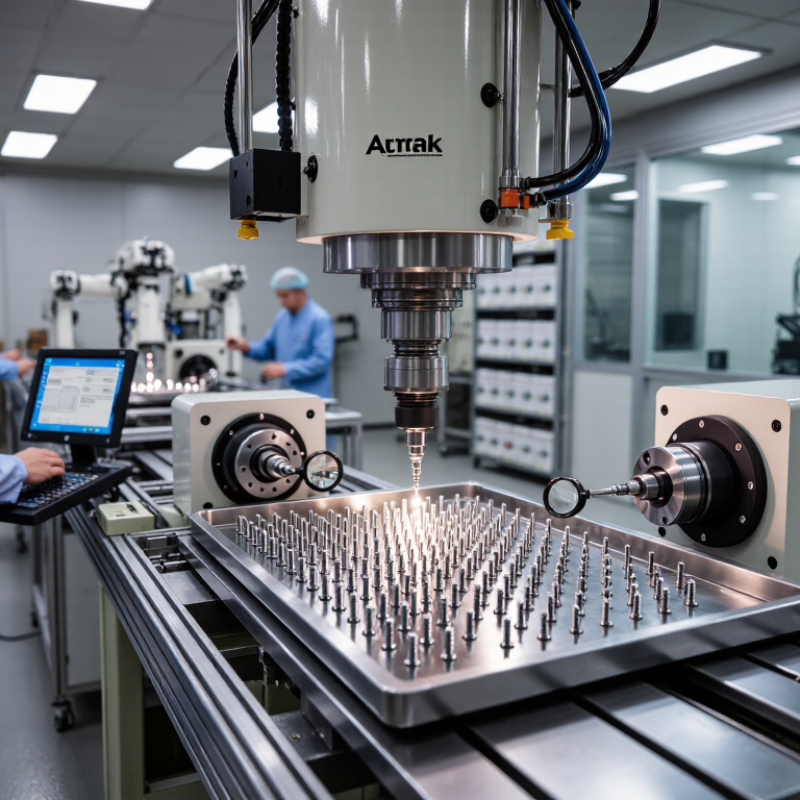
China Top Acutrak Screws Manufacturers for Global Buyers?

What Are Acutrak Screws and Where Are They Used?

Acutrak screws are headless, cannulated compression screws used in orthopedic fixation. Their variable-pitch threads can draw two bone fragments together during insertion. The screw head remains beneath the bone surface. This reduces irritation around joints and soft tissue. A guidewire usually establishes the path before drilling and placement. That small step matters. It supports controlled positioning.

Surgeons use these screws for small bone fractures, joint fusions, and corrective osteotomies. Common applications include the wrist, hand, foot, ankle, and selected elbow injuries. Different diameters and lengths match different bone sizes and load demands. Titanium versions may offer corrosion resistance and imaging compatibility. Stainless steel options can provide predictable strength and cost control. However, material choice should follow the surgical plan, imaging needs, and local clinical requirements.

For global buyers reviewing Chinese manufacturers, technical documents deserve close attention. Ask for dimensional drawings, material certificates, sterilization details, and inspection records. Cannulation accuracy is important because a poorly aligned guidewire can complicate insertion. Thread geometry also affects compression and purchase in hard or fragile bone. Packaging should protect sterile products from moisture and physical damage. Product names can create confusion. Confirm whether the screw is truly headless and variable-pitch, rather than relying on catalog wording. Even experienced teams may overlook this detail. Surgical use must remain under qualified clinical judgment.

What Are Acutrak Screws and Where Are They Used?

Acutrak screws are a type of headless compression screw designed to stabilize fractures and support arthrodesis while reducing implant prominence. Similar headless compression screw systems are commonly selected by anatomical region and required screw diameter, rather than by a single universal size.

The chart shows representative nominal diameters commonly used across headless compression screw applications. Smaller diameters are generally preferred for finger, toe, and small-joint fixation, while larger diameters may be selected for wrist, foot, ankle, and other higher-load fixation or fusion procedures. Final selection depends on anatomy, bone quality, fracture pattern, and surgeon judgment.

Key Factors for Evaluating Acutrak Screw Manufacturers

China Top Acutrak Screws Manufacturers for Global Buyers?

Key Factors for Evaluating Acutrak Screw Manufacturers

Global buyers should assess more than unit price when selecting headless compression screw manufacturers in China. Grand View Research estimated the global orthopedic implants market at approximately USD 47.4 billion in 2023, increasing pressure on suppliers to prove consistency, traceability, and clinical suitability. Ask for ISO 13485 certification, controlled material certificates, batch records, and sterilization validation. These documents reveal manufacturing discipline.

Technical evaluation needs measurable evidence. Request fatigue testing under ASTM F543, dimensional inspection reports, insertion-torque data, and cannulated drill compatibility records. For titanium screws, verify alloy documentation and surface treatment controls. A reliable factory should explain thread geometry, pitch tolerance, hardness, and pull-out performance without hiding behind general claims. Small details matter. One overlooked burr can affect insertion.

Production audits also deserve attention. Inspect CNC equipment, cleanroom controls, calibration labels, packaging integrity, and nonconformance procedures. The 2023 MedTech Europe industry report noted continued growth in medical technology demand, but supply pressure can encourage rushed qualification. That risk is real. Buyers should compare pre-production samples with later batches, not approve one attractive prototype. I would also review complaint handling and change-control records. Some manufacturers provide impressive certificates, yet their process evidence remains thin. That deserves a second look.

China Top Acutrak Screws Manufacturers for Global Buyers? – Key Factors for Evaluating Acutrak Screw Manufacturers

Evaluation Dimension Recommended Buyer Benchmark Objective Evidence to Request Relevant Standard or Reference Suggested Weight Priority
Quality Management System A documented and actively maintained quality system covering design, purchasing, production, inspection, nonconformity control, and corrective actions. Current certificate, certification scope, issuing body, validity dates, latest audit status, and sample corrective-action records. ISO 13485 ISO 9001 15% Critical
Regulatory Readiness Capability to support the destination market with complete technical files, traceability records, risk documentation, and applicable registration or conformity information. Device classification assessment, technical documentation index, declarations, regulatory history, and market-specific submission support. EU MDR FDA Requirements Local Rules 15% Critical
Material Verification Implant-grade material must be specified by grade, lot, condition, and applicable mechanical or biological requirements. Mill certificates, supplier qualification records, heat or lot numbers, incoming inspection reports, and material traceability from raw material to finished product. ISO 5832 ASTM F136 ASTM F67 12% Critical
Dimensional Accuracy Critical dimensions, thread geometry, drive interface, tip design, and mating features must be controlled against approved drawings and tolerances. Inspection plans, calibrated measurement equipment, first-article reports, capability studies, and dimensional inspection records by production lot. ISO 1101 ISO 2768 Approved Drawing 12% Critical
Mechanical Performance Performance data should cover axial, torsional, fatigue, pull-out, or other tests relevant to the intended screw design and clinical use. Validated test protocols, laboratory accreditation, raw data, acceptance criteria, test fixtures, sample conditioning, and reports linked to product lots. ASTM F543 ISO 10993-18 Risk-Based Testing 15% Critical
Surface Finish and Cleaning Surface condition, burr control, passivation or treatment, cleanliness, and packaging suitability should be defined and consistently monitored. Surface inspection criteria, passivation records, particulate or residue testing, cleaning validation, and visual inspection samples. ASTM F86 ISO 19227 8% Critical
Sterilization and Packaging Options Supplier should clearly distinguish non-sterile and sterile supply, define shelf life, and validate packaging for the selected sterilization method. Packaging validation, seal-strength data, aging studies, sterilization validation where applicable, labeling samples, and shipping simulation results. ISO 11607 ISO 11135 ISO 11137 8% Critical
Product Traceability Every finished unit or package should be traceable to raw materials, production records, inspection results, operators, and release authorization. Sample label, UDI or identification approach where applicable, lot-control procedure, batch records, recall procedure, and mock-traceability results. ISO 13485 UDI Rules Lot Control 8% Critical
Design and Customization Capability Ability to manage controlled changes to dimensions, thread profiles, drive systems, instrumentation interfaces, packaging, and labeling without compromising validation. Design-change procedure, engineering drawings, prototype records, verification and validation plans, sample development timeline, and change-control history. ISO 13485 Design Controls FMEA 7% Important
Production Capacity and Lead Time Capacity claims should be supported by actual equipment, qualified personnel, process flow, bottleneck analysis, and documented on-time delivery performance. Monthly capacity statement, production schedule example, equipment list, staffing plan, historical delivery data, and business-continuity measures. Capacity Audit OTD Records Contingency Plan 6% Important
Inspection and Testing Resources Critical inspection and test activities should be performed with calibrated equipment by trained personnel under controlled procedures. Equipment register, calibration certificates, laboratory scope, personnel qualification records, inspection frequency, and out-of-calibration procedures. ISO 17025 Calibration Control Training Records 5% Important
Commercial and Supply-Risk Controls Quotations should define minimum order quantity, tooling ownership, payment terms, warranty scope, intellectual-property protection, and change-notification requirements. Signed quotation, quality agreement, supply agreement, tooling register, insurance information, approved-vendor terms, and escalation contacts. Quality Agreement IP Protection Change Notice 4% Important

Leading Acutrak Screw Manufacturers for International Buyers

China’s leading Acutrak screw manufacturers serve international buyers through specialized orthopedic production lines. They typically manufacture headless compression screws in titanium alloy or surgical stainless steel. Buyers should examine thread accuracy, cannulation quality, drive recess strength, and surface finish. Small defects can affect insertion control.

Experienced manufacturers provide more than attractive quotations. They should offer material certificates, batch traceability, inspection records, and documented quality procedures. ISO 13485 certification is useful, but it should be verified through current certificates and audit details. Samples help. A buyer can inspect thread continuity, measure screw length, and test driver engagement before placing a larger order.

Reliable suppliers also understand international purchasing requirements. They can prepare technical files, packaging specifications, labeling details, and export documents for review by the buyer’s regulatory team. Ask about fatigue testing, cleaning processes, sterilization compatibility, and complaint handling. Production capacity matters, especially when several lengths and diameters must remain consistent.

No supplier is perfect. A factory may have strong machining skills but weak communication. Another may respond quickly but provide incomplete validation records. This is where careful comparison becomes important. Video audits, independent inspections, and clear acceptance criteria reduce avoidable surprises. Delivery promises should include realistic lead times, sample approval, and corrective-action procedures. The cheapest offer is rarely the safest decision. Details matter.

How to Compare Quality, Certifications, and Production Capabilities

For global buyers, comparing headless compression screw manufacturers requires evidence beyond attractive catalogs. A 2024 orthopedic devices market report valued the sector at approximately US$47 billion in 2023. Growth increases supplier choice, but it also increases verification risk. Ask for ISO 13485 certification, recent audit status, and product-specific scope. ISO’s 2023 survey recorded more than 38,000 ISO 13485 certificates worldwide. Certification helps, but it does not guarantee consistent screws. Numbers matter.

Review material certificates for implant-grade titanium or stainless steel, including heat numbers and chemical results. Check thread gauges, cannulation diameter, pitch, surface finish, and dimensional tolerance records. Request sample inspection reports from several production lots. A reliable factory should explain nonconforming-product control without hesitation. Traceability should connect raw material, operator, machine, inspection result, and shipment carton. Small details matter. Sterilization validation, packaging integrity, and shelf-life studies also need controlled documentation.

Production capability deserves a practical test. Ask for monthly capacity, equipment lists, critical-process validation, and backup plans for heat treatment or surface processing. Inspect whether quality staff work independently from production targets. FDA quality-system requirements and ISO 13485 both emphasize documented risk control, corrective action, and process consistency. A certificate alone can still hide weak shop-floor discipline. That uncomfortable gap deserves attention. Request a remote factory audit, then compare delivered samples against approved drawings before placing a large order.

What Global Buyers Should Check Before Placing an Order

When evaluating Chinese manufacturers of headless compression screws, global buyers should verify the product before discussing price. Ask for a complete technical drawing, including diameter, length range, thread pitch, cannulation, and drive geometry. Confirm the intended surgical application and compatible instruments. Small dimensional differences can affect insertion and compression. Do not rely on catalogue images alone.

Request material certificates for titanium alloy or stainless steel, supported by batch traceability. Check surface finish, hardness, torsional strength, fatigue performance, and corrosion testing. A credible supplier should explain its inspection process clearly. Review its quality-management certification and relevant biocompatibility documentation. Regulatory expectations vary by destination, so the supplier must provide documents suitable for your market. Missing paperwork is a warning sign.

Order samples from the proposed production line, not only showroom samples. Test thread engagement, driver fit, insertion resistance, and packaging integrity. Ask how sterile and non-sterile products are controlled. Verify label content, lot numbers, expiry information, and carton protection. An independent pre-shipment inspection can reveal mixed lots or incorrect quantities. I have seen buyers focus on unit price and overlook instrument compatibility. That mistake becomes expensive later. Clarify minimum order quantity, lead time, payment terms, inspection rights, and corrective-action procedures in writing. Some suppliers answer quickly but provide weak evidence. Treat that gap seriously. A careful supplier welcomes technical questions, admits limitations, and corrects unclear specifications before production.

FAQS

What are headless compression screws?

They are cannulated orthopedic screws with variable-pitch threads. The screw head sits below the bone surface. This can reduce soft-tissue irritation near joints.

How do these screws create compression?

A guidewire usually sets the insertion path. The threads then draw two bone fragments together during insertion. Alignment matters.

Where are these screws commonly used?

Surgeons use them for small bone fractures, joint fusions, and corrective osteotomies. Typical areas include the wrist, hand, foot, ankle, and selected elbow injuries. Clinical judgment remains essential.

How should buyers choose screw dimensions?

Match diameter and length to bone size and expected loading. Review thread pitch, cannulation, and drive geometry. Small differences can change insertion performance.

Which materials may be available?

Common options include titanium alloy and stainless steel. Titanium may support corrosion resistance and imaging needs. Stainless steel can offer predictable strength and cost control. The choice is not automatic.

What technical documents should buyers request?

Request dimensional drawings, material certificates, and batch traceability records. Also request sterilization details, inspection reports, and biocompatibility documents. Missing paperwork deserves attention.

How can buyers check product quality before ordering?

Order samples from the proposed production line. Test thread engagement, driver fit, insertion resistance, and packaging integrity. Do not trust catalog images alone. That shortcut can fail.

What should buyers verify about packaging and labeling?

Confirm sterile or non-sterile controls. Check lot numbers, expiry information, labels, and carton protection. Packaging should resist moisture and physical damage. An independent inspection may find mixed lots.

What commercial details should be written into the order?

Clarify minimum order quantity, lead time, payment terms, and inspection rights. Define corrective-action procedures before production starts. Fast replies are not enough. Evidence matters more.

Conclusion

This guide explains what Acutrak Screws are, how their headless and compression-focused design supports orthopedic fixation, and the types of surgical applications in which they may be used. It also outlines the main factors global buyers should consider when evaluating manufacturers, including material quality, dimensional accuracy, surface finish, production consistency, traceability, packaging, and technical support.

For international sourcing, the article presents a practical approach to comparing suppliers without focusing on brand names. Buyers will learn how to review certifications, quality-management systems, testing procedures, manufacturing capacity, customization options, lead times, and export experience. Before placing an order, they should verify product specifications, documentation, sampling arrangements, inspection standards, sterilization or packaging requirements, minimum order quantities, and after-sales communication. Careful evaluation of these areas can help buyers select a reliable manufacturing partner and reduce quality, delivery, and compliance risks.

Charlotte

Charlotte

Charlotte is a seasoned marketing professional with a deep understanding of the company's portfolio and a passion for elevating its presence in the market. With a keen eye for detail and a commitment to excellence, she ensures that our professional blog is regularly updated with insightful articles......