Medispirex Medispirex

What Are Self Tapping Bone Screws Used For?

Time:2026-10-08 Author:Mason
0%

Self Tapping Bone Screws are designed to create their own pilot thread as they enter prepared bone. This feature can simplify fixation during orthopedic and dental procedures. Surgeons commonly use them to secure plates, fragments, grafts, and selected implants. Their cutting flutes may reduce instrument changes and shorten handling time. However, they do not eliminate the need for accurate drilling, appropriate sizing, or careful insertion.

The clinical value depends on bone quality, screw geometry, thread design, and the intended load. In dense cortical bone, self-tapping threads can improve purchase when preparation is precise. In softer or osteoporotic bone, excessive insertion torque may damage the surrounding structure. Small details matter. A stripped head or poorly aligned screw can compromise fixation. The FDA’s guidance on orthopedic non-spinal metallic implants emphasizes material safety, mechanical performance, and appropriate device evaluation. These factors support a risk-based explanation rather than a purely promotional one.

Market research from Grand View Research and Fortune Business Insights identifies continued growth in orthopedic implant demand, supported by trauma care, aging populations, and reconstructive surgery. Yet market expansion does not prove that every self-tapping design suits every patient. That distinction deserves attention. Clinical reviews in orthopedic literature also connect fixation success with surgical technique, bone biology, and postoperative management. This article will examine what Self Tapping Bone Screws are used for, how their cutting tips function, and where their practical limitations appear. The answer is useful, but not absolute. Local protocols and qualified surgical judgment remain essential.
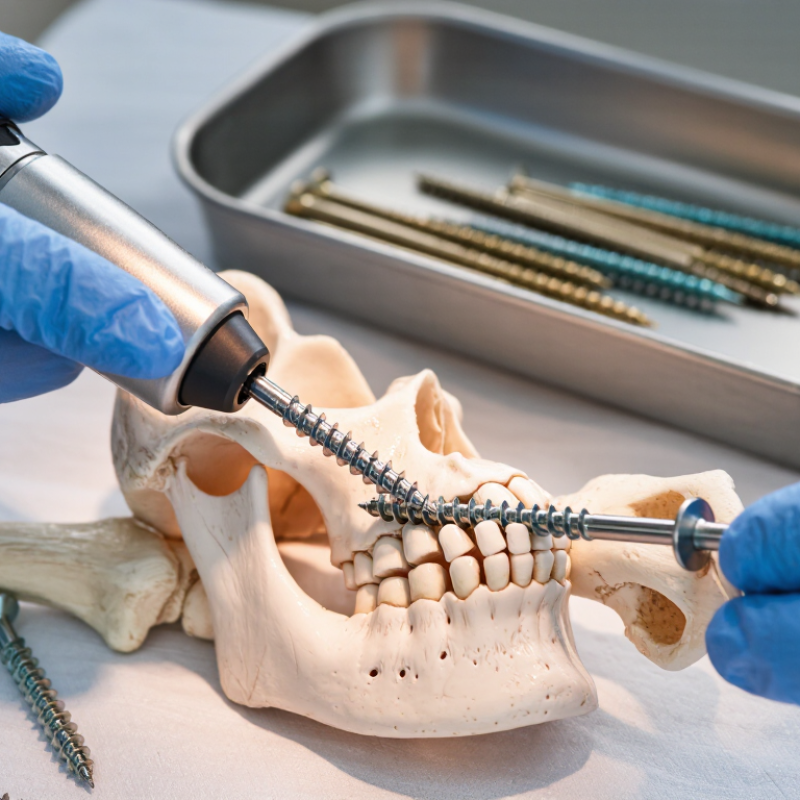
What Are Self Tapping Bone Screws Used For?

What Are Self-Tapping Bone Screws?

What Are Self-Tapping Bone Screws?

Self-tapping bone screws are orthopedic fasteners designed to create their own threads as they enter bone. Their sharp tip and cutting flutes remove small amounts of material during insertion. This action can reduce the need for a separate tapping step.

They are used to secure plates, fragments, or other fixation components during bone repair. Some designs work well in harder cortical bone, while others suit softer cancellous bone. The screw’s diameter, length, thread pattern, and tip shape all matter. A suitable pilot hole may still be required. Self-tapping does not always mean “no drilling.” That detail is easy to overlook.

The term sounds simple. Clinical use is not. Surgeons consider bone quality, fracture location, screw direction, and the surrounding nerves or vessels. Excessive insertion force can damage threads or weaken the fixation site. Insufficient engagement may allow movement during healing. Proper imaging, sterile technique, and trained judgment remain essential.

Tips: Check the screw’s intended bone type and size before use. Keep the driver aligned with the screw axis. Apply steady pressure, not sudden force. If resistance changes sharply, pause and reassess. A pilot hole may need cleaning or adjustment. In practice, small differences in technique can affect the final hold.

What Are Self-Tapping Bone Screws Used For?

Self-tapping bone screws are used to secure fractured bone fragments, fixation plates, bone grafts, and selected orthopedic implants. Their cutting flutes form internal threads in the prepared pilot hole, which can reduce or eliminate a separate tapping step.

The chart shows representative screw diameters commonly associated with different orthopedic fixation contexts. Actual size selection depends on bone quality, anatomy, implant system, and surgical technique.

How Do Self-Tapping Bone Screws Work?

Self-tapping bone screws are used in fracture fixation, joint fusion, and selected reconstructive procedures. Their key feature is mechanical, not magical. A sharp cutting flute at the screw tip creates threads inside a prepared bone hole. As the surgeon advances the screw, the flute removes small bone particles and forms a matching thread path. This can reduce separate tapping steps and shorten instrument handling.

However, self-tapping does not always mean self-drilling. Dense cortical bone may still require a pilot hole, proper alignment, and controlled insertion torque. The screw must engage enough healthy bone without crushing fragile tissue. This matters because the Global Burden of Disease Study 2019 reported about 178 million new fractures worldwide. The Lancet report also identified a substantial long-term disability burden from musculoskeletal conditions. More cases increase the need for reliable fixation, but screw choice remains patient-specific.

Tips: Confirm the screw diameter, length, and thread design before insertion. Keep the trajectory centered, especially near a joint surface. Excessive torque can damage the thread path or strip soft bone. A practical mistake is assuming every self-tapping screw performs equally in osteoporotic bone. It does not. Surgical experience, imaging, and the manufacturer’s validated technique still matter. The AO Surgery Reference emphasizes stable reduction, appropriate pilot-hole preparation, and careful handling of fixation devices. These details may seem small. They often decide whether fixation feels secure during follow-up.

What Types of Bone Screws Are Self-Tapping?

What Are Self-Tapping Bone Screws Used For?

Self-tapping bone screws cut their own threads during insertion. They are used in fracture fixation, osteotomies, and selected joint reconstruction procedures. The tip contains cutting flutes, so surgeons may avoid a separate tapping step. This can reduce instrument changes.

Small details matter.

The key question is not whether a screw looks sharp. Cortical screws are commonly self-tapping because dense cortical bone needs controlled thread formation. Cancellous screws may also use self-tapping tips, especially in softer metaphyseal bone.

Locking screws can be self-tapping too, although their thread design must match the plate’s threaded hole. Cannulated screws may include self-tapping features, but cannulation alone does not make a screw self-tapping.

The terminology is often inconsistent.

Fully threaded and partially threaded designs can both be self-tapping. Selection depends on bone density, fracture pattern, screw diameter, and required compression. A self-drilling screw is different because it creates its own pilot hole; self-tapping mainly describes thread cutting.

The FDA’s guidance for orthopedic non-spinal metallic bone screws identifies insertion torque, stripping torque, and pullout strength as important bench-test measures. ASTM F543 also provides standardized methods for evaluating these properties.

These tests support reliability, but they cannot reproduce every surgical hand movement or patient condition. In practice, a screw may tap efficiently in one bone and feel too aggressive in another. That uncertainty deserves attention.

Where Are Self-Tapping Bone Screws Used?

What Are Self-Tapping Bone Screws Used For?

Where Are Self-Tapping Bone Screws Used?

Self-tapping bone screws are used to secure fractured bone and hold plates in position. Their cutting tip forms threads while the screw advances. This can reduce surgical steps, especially in dense cortical bone. Common locations include the forearm, ankle, wrist, foot, and facial skeleton. They are also used in small-bone fixation, where limited exposure makes repeated drilling inconvenient.

Their value is linked to the continuing burden of injury. The Global Burden of Disease 2019 study reported about 178 million new fractures worldwide in 2019. The World Health Organization also estimates that 1.71 billion people live with musculoskeletal conditions. These figures do not decide screw choice. Bone quality, fracture pattern, screw diameter, and load direction still matter. In my view, “self-tapping” is helpful, but it is not automatically safer or stronger. Surgeons must control insertion torque and protect nearby soft tissue. A pilot hole may still be appropriate in hard bone.

Tips: Confirm the bone type first. Use the correct drill size and depth. Avoid excessive force. If the screw feels unusually tight, stop and reassess. Small errors can damage threads or weaken fixation. This detail is easy to overlook during fast trauma procedures. Selection should follow imaging, surgical training, and the device’s validated instructions for use.

What Are Their Benefits and Limitations?

What Are Self Tapping Bone Screws Used For?

Self-tapping bone screws are used to secure fractures, plates, grafts, and selected orthopedic implants. Their cutting flutes create threads as the screw advances through a prepared pilot hole. Surgeons may use them in small-bone fixation, trauma procedures, and certain reconstructive operations. The exact choice depends on bone quality, screw diameter, and load requirements.

Their main benefit is efficiency. A self-tapping design can reduce the need for a separate tapping step. This may shorten instrumentation changes and simplify the surgical workflow. It also gives the surgeon useful tactile feedback during insertion. In suitable cortical bone, the screw can achieve firm thread engagement. Less equipment can matter in a crowded operating field.

They have limitations. The cutting tip does not replace accurate drilling or careful alignment. In dense bone, excessive insertion force can strip the threads or damage the screw head. Poor technique may also generate heat and affect surrounding bone. Osteoporotic or very thin bone can provide weak purchase, even when the screw enters smoothly. That smooth feeling can mislead. A pilot hole that is too small increases resistance, while one that is too large reduces fixation strength. Surgeons must also consider proximity to joints, nerves, and blood vessels. Self-tapping screws are helpful tools, not automatic solutions. Their performance depends heavily on planning, bone condition, and controlled insertion.

FAQS

What are self-tapping bone screws?

They are fixation screws with sharp flutes near the tip. The flutes cut threads inside a prepared bone hole.

How do self-tapping bone screws work?

As the screw advances, its cutting tip removes small bone particles. It forms a matching thread path inside the pilot hole.

Do self-tapping screws always drill their own holes?

No. Dense cortical bone may still require a pilot hole. Self-tapping does not always mean self-drilling.

What procedures may use these screws?

They may secure fractures, plates, grafts, and selected orthopedic implants. Common applications include trauma, small-bone fixation, and joint fusion.

What is their main benefit?

They can reduce a separate tapping step. This may simplify instrument handling and shorten workflow in a crowded operating field.

What are their main limitations?

They cannot replace accurate drilling, alignment, or careful planning. Fragile bone may offer weak thread purchase, even when insertion feels smooth.

Why does bone quality matter?

Dense bone can increase insertion resistance. Osteoporotic bone may strip easily, like a screw losing grip in soft wood.

What can happen when the pilot hole is too small?

Insertion torque may rise sharply. Excessive force can damage the thread path, harm surrounding bone, or strip the screw head.

What details should be checked before insertion?

Confirm the screw diameter, length, and thread design. Keep the trajectory centered, especially near a joint surface.

Does a self-tapping design guarantee secure fixation?

No. Fixation depends on bone condition, screw selection, reduction, imaging, and controlled insertion. That assumption fails.

Conclusion

Self Tapping Bone Screws are specialized orthopedic fasteners designed to create their own thread path as they are inserted into bone. Unlike conventional screws that may require a separate tapping step, their cutting flutes or threaded tips help prepare the bone while advancing, allowing the screw to achieve stable fixation with fewer procedural steps. They are commonly made in different shapes, thread patterns, diameters, and lengths to suit various bone conditions and surgical requirements.

These screws may be used in fracture fixation, small-bone surgery, joint procedures, spinal applications, and the attachment of plates or other fixation devices. Their main benefits include efficient placement, reduced surgical time, reliable grip, and minimized instrument requirements. However, their performance depends on correct sizing, insertion angle, bone quality, and controlled torque. Potential limitations include difficulty in very dense or fragile bone, risk of stripping or loosening, and the need for careful technique to avoid damage to surrounding tissue. Proper clinical evaluation and surgical planning are essential for safe and effective use.

Mason

Mason

Mason is a seasoned marketing professional with a deep expertise in the company's offerings and a passion for driving brand awareness. With a strong background in digital marketing strategies, he has an innate ability to connect with diverse audiences and effectively communicate product benefits.......